Get Product Advice
Quick Product Guide
-
Available lengths: 1320 mm, 1800 mm, 2100 mm and 2400 mm
-
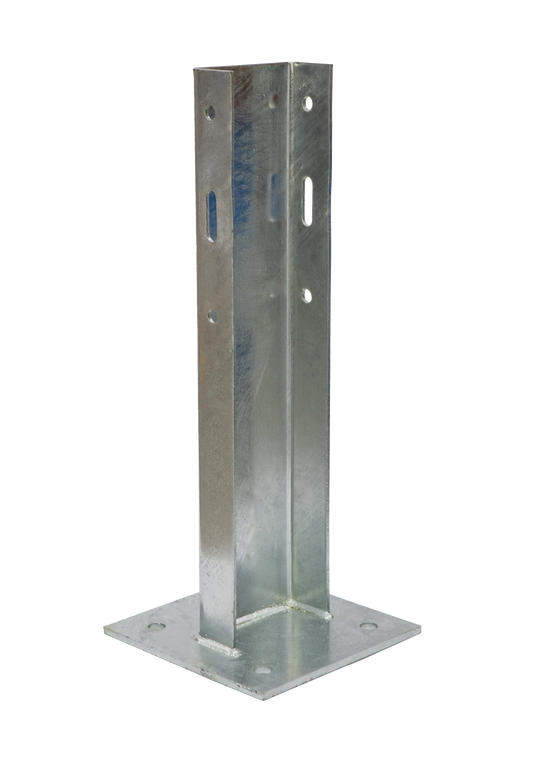
Profile: 178 × 76 × 6 mm C-channel section
-
Material: 6 mm HA250 steel to AS/NZS 1594
-
Finish: Hot-dip galvanised to AS 4680:2006
-
Installation: Driven into suitable ground or set in concrete
-
Ordering: Available online for Australia-wide delivery
The appropriate post length, embedment and installation method will depend on the complete barrier design, ground conditions and project requirements.
Shop Steel Guardrail Posts Online
Buy individual guardrail post products online for compatible new installations, extensions or replacement projects. The range includes four C-channel post lengths, making it possible to select products according to the required above-ground height and below-ground embedment.
A post is only one part of a complete system. Before ordering, confirm its compatibility with the selected W-beam guardrail, bolts, spacer blocks and other barrier components. Customers should also verify the required post spacing and installation method against their project documentation.
Guardrail Direct provides online ordering and Australia-wide delivery. Contact our team if you need assistance checking products or quantities.
Available C-Channel Guardrail Post Lengths
1320 mm C-Channel Post
The 1320 mm product is the shortest steel guardrail post in the current range. It is manufactured from a 6 mm C-channel steel section and supplied with a galvanised finish.
Confirm that the post provides the required embedment and above-ground rail height for your application before ordering.
1800 mm C-Channel Post
The 1800 mm post provides an intermediate-length option for compatible guardrail systems. Its suitability will depend on the ground conditions, installation method and specified barrier configuration.
2100 mm C-Channel Post
The 2100 mm C-channel post gives project planners a longer option where additional total post length is required. Post selection should be based on the relevant design or professional advice rather than length alone.
2400 mm C-Channel Post
At 2400 mm, this is the longest inground post currently available through the online range. It may suit projects specifying a longer below-ground post, subject to ground conditions, installation requirements and the complete system design.
What Are Inground Guardrail Posts?
An inground guardrail post is a steel support that extends below the surrounding ground surface and carries compatible guardrail rail. Depending on the location and project requirements, the post may be driven directly into suitable ground or set into concrete.
The C-shaped steel profile provides a strong supporting structure while allowing the rail and associated components to be attached according to the barrier design. Posts help maintain the height, alignment and spacing of the guardrails along the installation.
The performance of a safety barrier depends on the complete system, not simply the post. Rail type, post length, spacing, embedment, fixings, end treatments and ground conditions all need to be considered together.
Inground vs Surface-Mounted Guardrail Posts
The key difference between the two post types is how they connect to the site.
Inground guardrail posts extend below ground. They are intended for locations where excavation, driving or concrete embedment is possible and permitted.
Surface-mounted posts are welded or otherwise connected to a baseplate, which is fixed to an appropriate existing surface using suitable anchors. They are commonly considered where below-ground installation is impractical or where a guardrail must be positioned on an existing concrete structure.
Neither option is universally suitable for every site. The correct post type depends on the surface, ground conditions, barrier purpose and project design.
Steel Posts for W-Beam Guardrail Systems
C-channel guardrail posts are designed to support compatible W-beam rail as part of a broader protective system. A complete installation may include:
- W-beam guardrail in the required lengths
- Inground steel posts
- Mushroom-head or splice bolts
- Steel spacer blocks where specified
- Bullnoses, bends or other end components
- Additional rails or handrails where required
Spacer blocks may be positioned between the rail and post in selected configurations. Whether they are required depends on the barrier design and intended application.
Check the specifications for every component before purchasing. For complex, roadside or safety-critical projects, the system should be designed or reviewed by an appropriately qualified professional.
Where Are Inground Guardrail Posts Used?
Roadside and Infrastructure Projects
Inground posts are commonly associated with roadside W-beam systems designed to separate vehicles from identified hazards. Every roadside installation must follow its approved design and relevant project specifications.
Warehouses and Factories
Where ground conditions permit, steel guardrail posts may support barriers that help separate vehicle or forklift areas from pedestrians, buildings and equipment.
Car Parks and Commercial Properties
Guardrail systems can help protect structures, essential services, landscaped areas and pedestrian zones from vehicle movements. Inground posts may be considered around open car parks and commercial sites where below-ground installation is suitable.
Industrial and Workplace Areas
Industrial guardrail can create boundaries around tanks, machinery, loading areas and restricted zones. The correct barrier configuration should reflect the vehicles, equipment, pedestrians and hazards present at the workplace.
How to Choose a Guardrail Post
Consider the following before buying inground posts:
-
Confirm the barrier design. Identify the required rail type, height and overall layout.
-
Assess the ground. Determine whether the soil and site access are suitable for driving posts or whether concrete embedment is required.
-
Select the post length. Allow for the specified above-ground height and below-ground embedment.
-
Verify post spacing. Follow the project design rather than assuming one spacing suits every application.
-
Check compatibility. Confirm that the rails, posts, bolts, spacer blocks and end components work together.
-
Review site services. Identify underground utilities and other constraints before any excavation or post-driving work begins.
-
Obtain professional advice. Seek appropriate engineering or installation guidance for roadside, impact-related and other safety-critical systems.